Lip gloss

Mason O'Donnell
| 28-05-2026
 · Fashion team
You pick up two products at the beauty counter. Both are pink.
Both have shine. Both are described somewhere on the packaging as offering a glossy, hydrating finish.
You buy one, get home, apply it, and realize it looks nothing like what you imagined — either too sheer to register or too opaque to feel wearable for a Tuesday afternoon. The shelf made them look identical. Your lips told a different story.
Tinted lip gloss and lipstick with a glossy finish are genuinely different products built around different priorities. Understanding what separates them makes the choice between them much easier — and the result much closer to what you actually wanted.
What Each Product Is Actually Built to Do
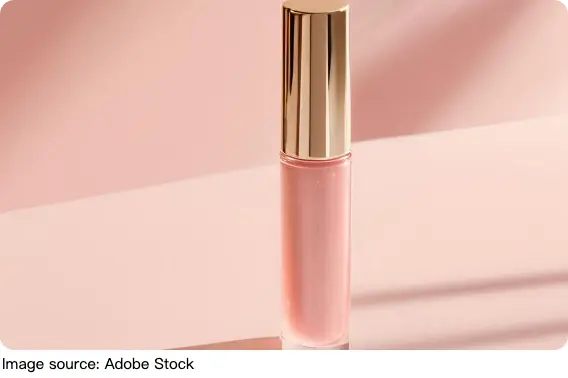
A tinted lip gloss starts as a gloss first. Its primary job is to deliver shine, reflect light, and create the appearance of fuller, more dimensional lips. The color is secondary — present enough to add warmth or a wash of tone, but never so pigmented that it competes with the wet, luminous finish. The texture is typically fluid or gel-like, applied with a doe-foot applicator, and designed to sit on top of the lips rather than sink into them.
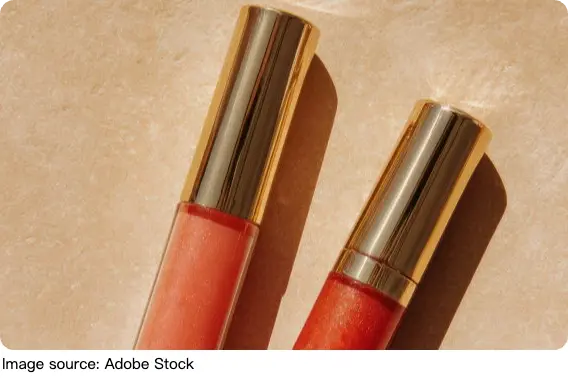
A glossy lipstick, by contrast, starts as a lipstick. It is built around pigment delivery — full, consistent color coverage that defines and saturates the lips. The shine is a finish choice, achieved through the inclusion of emollients, oils, or reflective particles in the formula. The texture is structured enough to hold its shape, applied with a wist-up applicator or a brush, and formulated to stay where it is placed rather than moving freely across the lip surface.
These are not two versions of the same thing. They are two different products that happen to share a visual quality when photographed.
How They Behave Differently Through the Day
The structural difference between the two products produces very different wearing experiences once you leave the mirror.
1. Tinted gloss migrates. Because the formula is fluid and oil-rich, it moves with lip movement, eating, and drinking. This gives it a soft, effortless quality that many people find appealing for casual wear, but it also means the edges blur and the color shifts within an hour or two of application. Reapplication is part of the product's nature, not a flaw.
2. Glossy lipstick holds its shape considerably longer. The waxy or butter-based structure gives it staying power that a gloss formula cannot match. The shine may diminish before the color does — oils in the formula evaporate or absorb into the lips over time — but the pigment remains relatively intact, keeping the lip defined even as the finish softens.
3. Comfort differs in a way that becomes noticeable over several hours. Tinted gloss tends to feel lighter and more moisturizing throughout wear because of its high oil content. Glossy lipstick, particularly in more pigment-dense formulas, can feel drier as it settles, especially on lips that are not well-moisturized beforehand.
Which Skin Tones and Occasions Suit Each Better
Neither product is universally superior. Each suits specific contexts more naturally than the other.
Tinted gloss tends to be more flattering for everyday, low-effort wear across a wide range of skin tones. The sheerness means mistakes in shade selection are forgiving — a color that might look overwhelming in a full lipstick reads as a soft enhancement in gloss form. For fair to medium skin, pink and peach-toned glosses add life without commitment. For deeper skin tones, berry and plum-tinted glosses create richness without requiring precision application.
Glossy lipstick earns its place in situations where definition matters.
1. Formal occasions or evening settings call for a lip that reads clearly and stays put through conversation, dining, and photography. A glossy lipstick delivers both the color and the shine without requiring constant touch-ups.
2. When the rest of the face is minimal — barely-there foundation, groomed brows, no eye makeup — a glossy lipstick provides enough presence to anchor the look without a second product layered over it.
3. For anyone who finds reapplication inconvenient or impractical during the day, the staying power of a pigmented glossy formula is simply the more functional choice.
When Layering Both Makes Sense
The most versatile approach is not choosing one over the other permanently but understanding how they work together.
Applying a glossy lipstick as the base and a clear or lightly tinted gloss over the top gives you the color definition of the lipstick with the amplified shine and dimensional quality of the gloss. The gloss refreshes the finish as it fades, extending the overall wear. Many professional makeup artists use this combination precisely because it gives them control over both variables — color and shine — independently.
The difference between these two products is not about which one is better. It is about knowing what you are reaching for and why. Once that distinction is clear, you stop standing at the counter guessing and start choosing with the kind of quiet confidence that makes the whole routine feel less like a guess and more like a decision.